
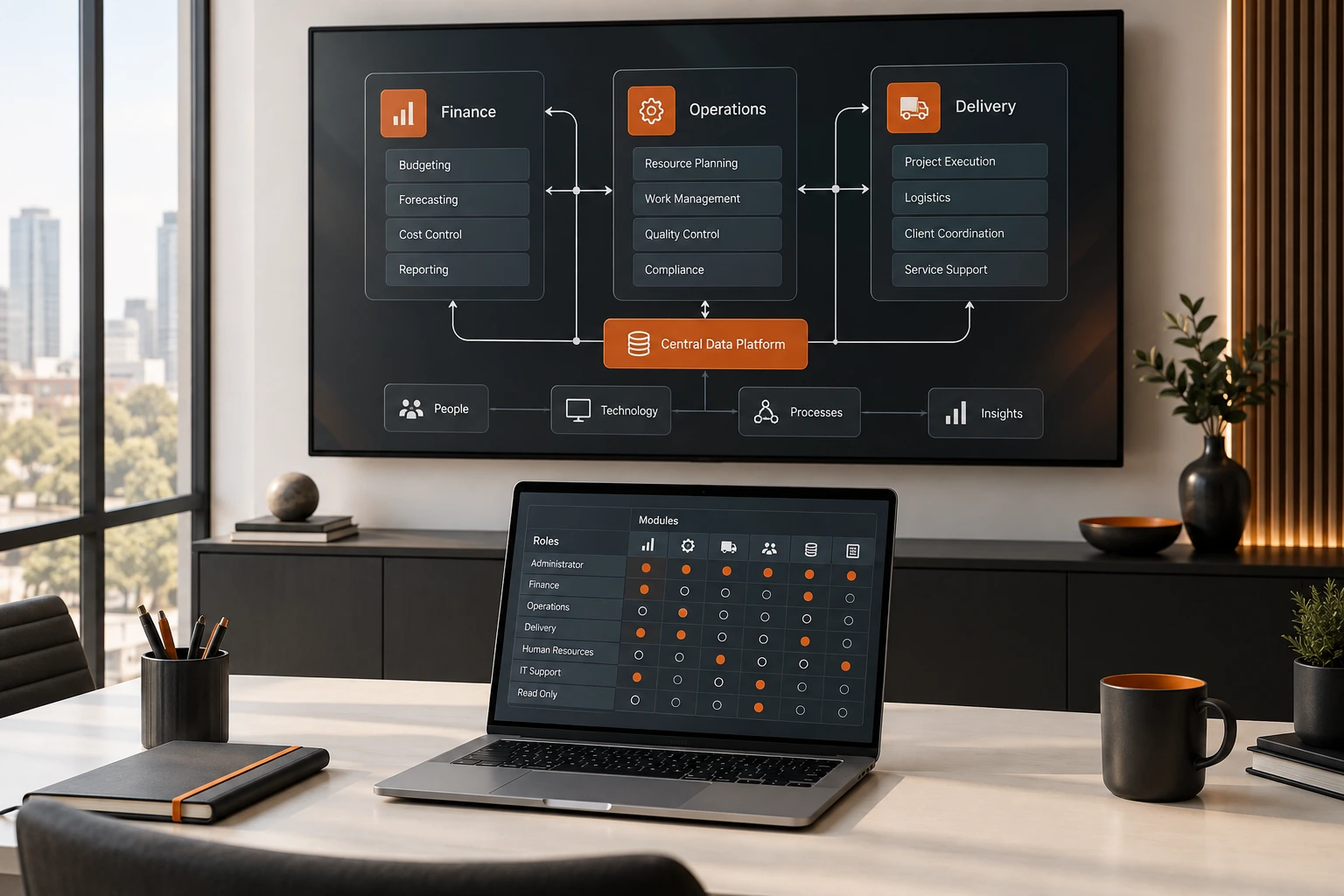
Architecture & integration plan
System boundaries, ownership of data, permission requirements, and the contracts connecting existing platforms.
Enterprise Solutions
Abronsys develops enterprise applications that bring fragmented workflows, business data, and departmental responsibilities into a coherent operational experience.
NOIDA, INDIA FROM DISCOVERY TO DELIVERY
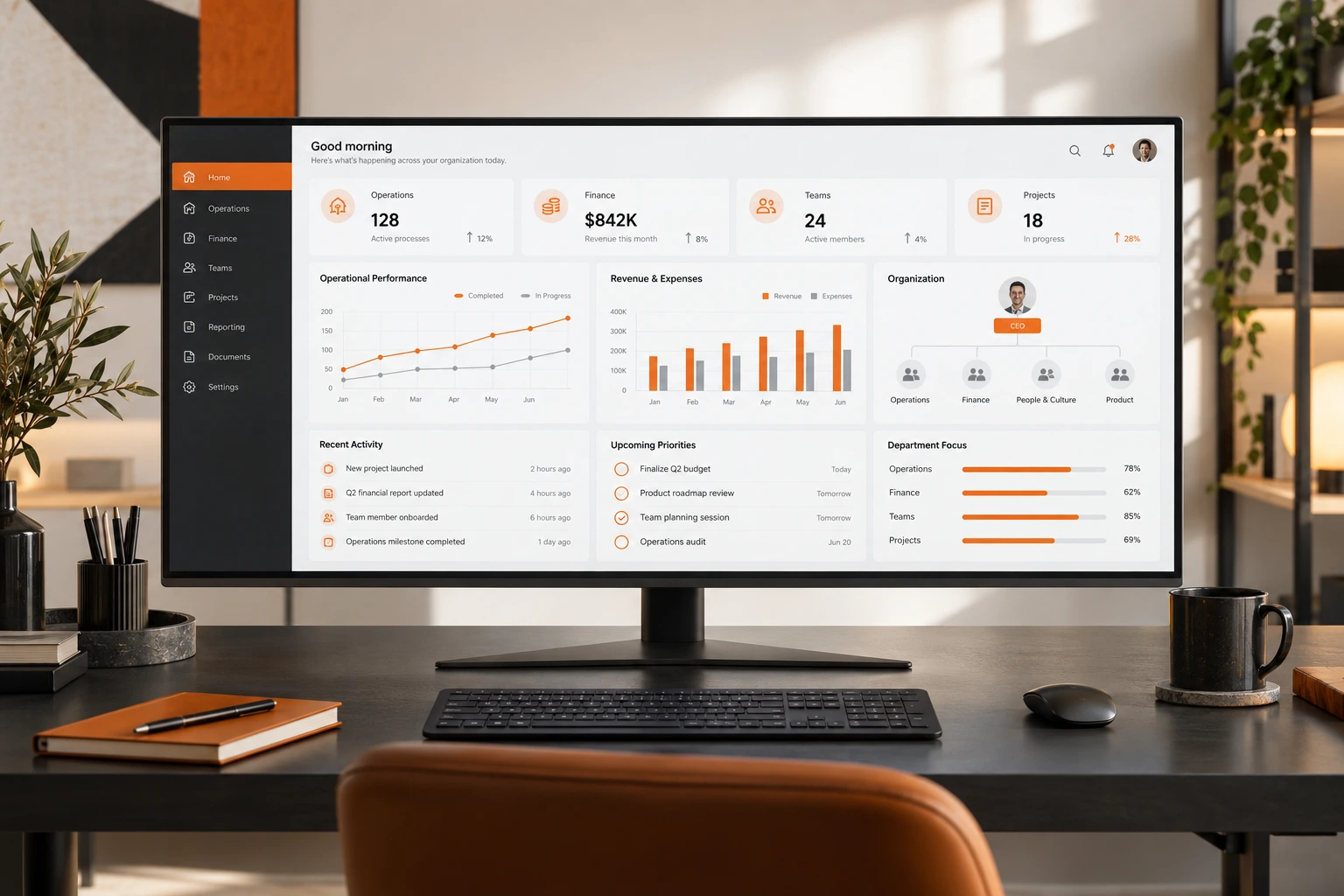
Management applications that connect operational information while respecting team responsibilities.
Illustrative concepts, not client project screenshots.
01 /THE OPPORTUNITY
Enterprise systems succeed when they reflect how decisions and information move through an organization. We map the teams involved, the systems of record, the approval boundaries, and the reporting obligations before defining the solution.
Projects may include internal portals, management dashboards, cross-system integrations, or modernization of a legacy application. We plan delivery around dependencies and adoption so that operational continuity remains part of the design.
Enterprise work typically involves multiple stakeholders, existing platforms, and data that already has an owner. Abronsys identifies which system is authoritative for each record, how updates travel between systems, and who is allowed to take each action. This helps avoid a new dashboard becoming another disconnected source of information. Delivery is then organized around dependencies, user acceptance, and the practicalities of transitioning teams.
WHAT DELIVERY INCLUDES
We agree the scope before development begins. A typical engagement can include the following.
System boundaries, ownership of data, permission requirements, and the contracts connecting existing platforms.
Portals, approval workflows, dashboards, or management functions matched to the agreed departmental needs.
Checks for permissions, data consistency, integration failures, and acceptance by representative business users.
Migration and cutover preparation where required, together with training, handover, and operational responsibilities.
02 /CAPABILITIES
Scope the capabilities your business needs, then connect them into a coherent product.
Departmental tools and shared workspaces for requests, resources, approvals, and reporting.
Connect ERP, CRM, and other approved systems through documented interfaces and reliable synchronization.
Role-based permissions and single sign-on integration where supported by your identity environment.
Dashboards, activity records, and operational reporting based on defined business metrics.
03 /BUSINESS VALUE
Reduce fragmented handoffs between departments and systems.
Make access, ownership, and approval responsibilities explicit in the application.
Replace or extend components in stages instead of forcing an all-at-once transition.
04 /OUR APPROACH
Identify owners, systems of record, workflows, and deployment constraints.
Define access boundaries, integration contracts, and data ownership.
Validate each capability with business users and technical stakeholders.
Plan migration, training, operational documentation, and support responsibilities.
05 /TECHNOLOGY & TOOLS
These are technology options we can use. The final stack is agreed after reviewing your existing systems, requirements, operating model, and budget.
06 /INDUSTRIES & USE CASES
Shared operations portals and approval chains.
Partner coordination and cross-system visibility.
Resource planning, client delivery, and management reporting.
AN EXAMPLE ENGAGEMENT
A practical scenario to explain the approach, not a client case study.
07 /WHY ABRONSYS
Work with a Noida-based team that connects the business problem, the user experience, and the implementation plan.
We evaluate integration and extension before proposing replacement.
Stakeholder reviews cover both usability and operational requirements.
Migration and rollout are treated as deliverables, not last-minute tasks.
08 /YOUR QUESTIONS
We assess the available APIs, access permissions, data contracts, and licensing constraints first. The integration scope depends on what the existing platforms support.
Yes. We define the permission model from your responsibilities and data boundaries, then validate it with representative users.
We plan staged releases, migration validation, rollback options, and stakeholder acceptance. The right approach depends on the systems and workflows involved.
We can implement technical requirements agreed with your compliance advisers. Certification and legal compliance assessments are separate activities and are not implied by development work.
09 /LET’S BUILD SOMETHING USEFUL
Tell us what you want to achieve with enterprise solutions. Share your current challenges, existing systems, and priorities so we can discuss a practical starting point.
Get in TouchFill out the form below. Your enquiry will instantly reach our Noida software team and admin inbox!