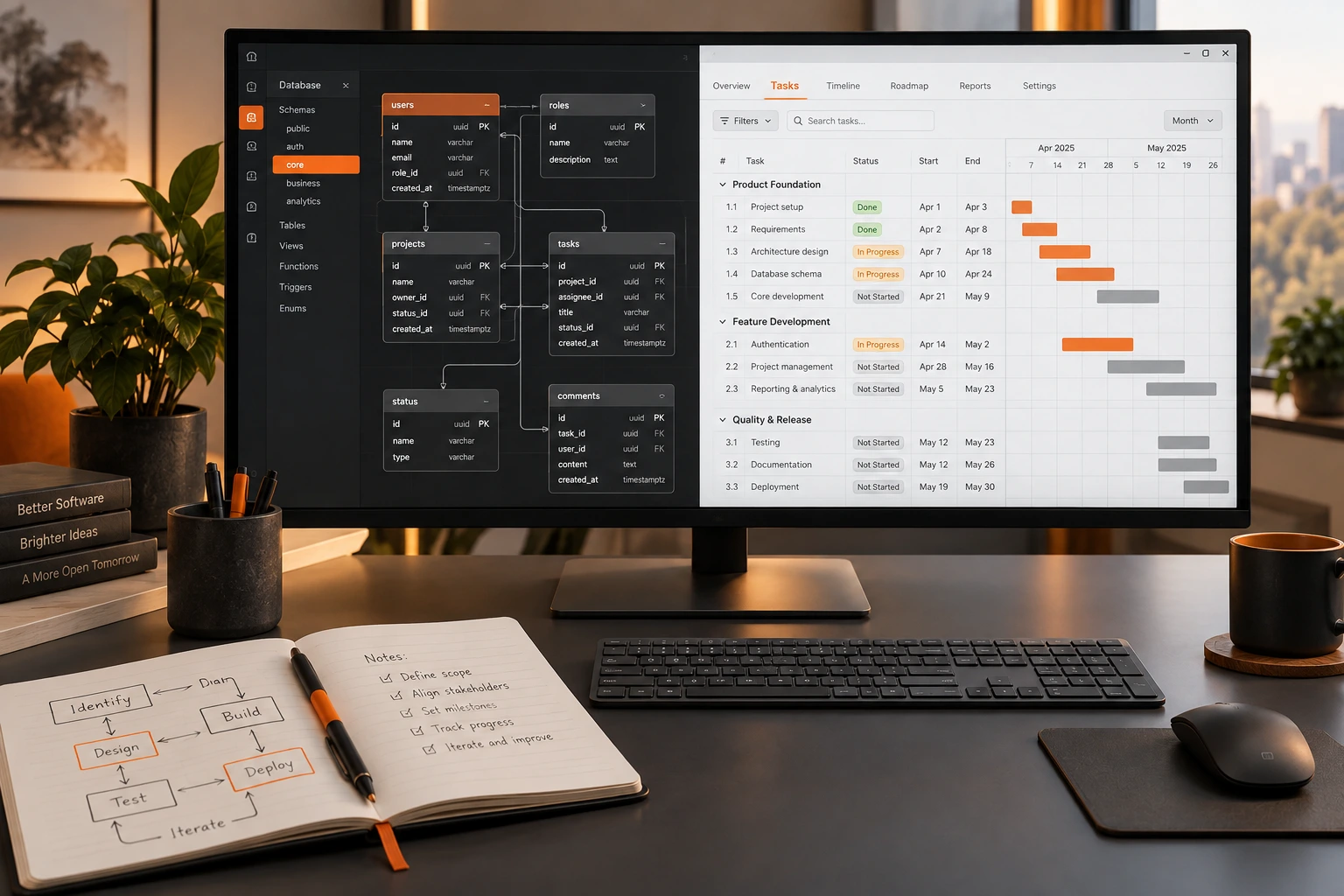
Workflow & business-rule specification
A shared description of roles, decisions, exceptions, and the records each step creates or changes.
Custom Software Development
When standard tools create workarounds, Abronsys helps you build a system around your processes, responsibilities, and business rules.
NOIDA, INDIA FROM DISCOVERY TO DELIVERY
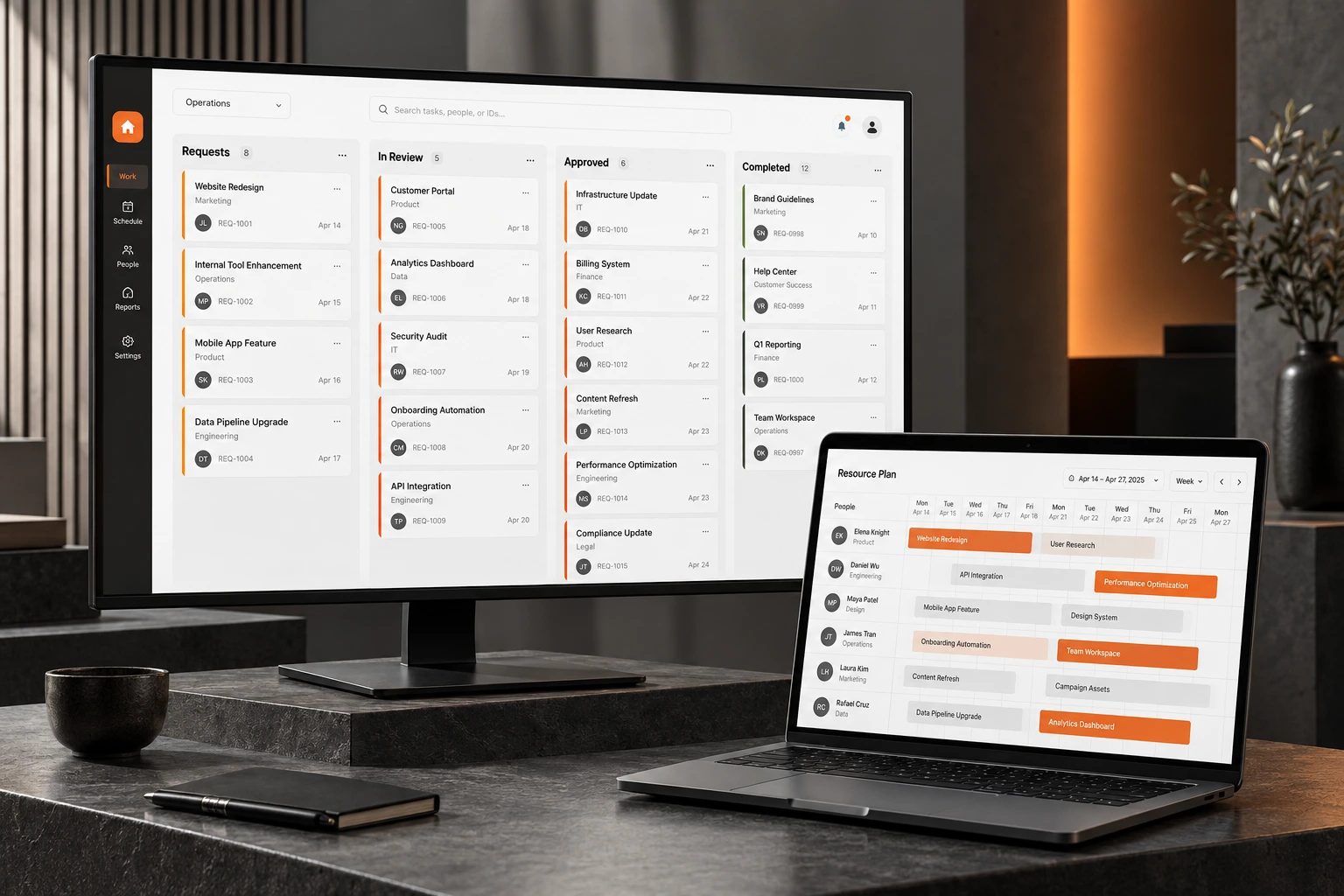
Requests, approvals, schedules, and business rules brought into one purpose-built workspace.
Illustrative concepts, not client project screenshots.
01 /THE OPPORTUNITY
Custom development starts with understanding where your current tools fall short. We examine handoffs, duplicate work, approval rules, reporting needs, and the exceptions that make your operation different.
The result can be a focused internal tool or a wider business platform. We define boundaries carefully, integrate existing systems where practical, and prioritize the workflows that provide the clearest operational value.
Custom software is useful when the important details of your operation do not fit a standard product. Those details might include a multi-stage approval, different rules for different customers, or a handoff between departments. Abronsys documents the normal process and its exceptions, then builds the smallest coherent system that can support them. Existing tools are retained or integrated where that is more practical than replacement.
WHAT DELIVERY INCLUDES
We agree the scope before development begins. A typical engagement can include the following.
A shared description of roles, decisions, exceptions, and the records each step creates or changes.
The agreed screens, automation rules, reports, and integrations, delivered in reviewable increments.
Data mapping and validation where migration is included, plus a plan for trial use and staged adoption.
Setup instructions, user guidance, and technical handover materials aligned with the maintenance responsibilities.
02 /CAPABILITIES
Scope the capabilities your business needs, then connect them into a coherent product.
Model approvals, task routing, notifications, and exceptions around your actual operating process.
Purpose-built applications for scheduling, resource management, case handling, and service delivery.
Map existing records, validate data quality, and connect systems through agreed APIs or import processes.
Operational views, role-based access, and activity history to support oversight and accountability.
03 /BUSINESS VALUE
Move repetitive coordination and data handling into well-defined workflows.
Give teams a shared view of work status, ownership, and bottlenecks.
Prioritize improvements around your requirements instead of a packaged tool’s roadmap.
04 /OUR APPROACH
Document current workflows, exceptions, roles, and measurable acceptance criteria.
Agree the first release, integration boundaries, and data model.
Review working increments with the people who will operate the software.
Validate migration, train users, and plan staged adoption and support.
05 /TECHNOLOGY & TOOLS
These are technology options we can use. The final stack is agreed after reviewing your existing systems, requirements, operating model, and budget.
06 /INDUSTRIES & USE CASES
Job tracking, approvals, and resource allocation.
Dispatch coordination, inventory processes, and exception handling.
Employee requests, vendor management, and custom reporting.
AN EXAMPLE ENGAGEMENT
A practical scenario to explain the approach, not a client case study.
07 /WHY ABRONSYS
Work with a Noida-based team that connects the business problem, the user experience, and the implementation plan.
We investigate the workflow before proposing features.
Essential capabilities are separated from optional enhancements.
Clear structure and documentation support future changes and handover.
08 /YOUR QUESTIONS
It is worth considering when important workflows are poorly served by existing tools, integrations are limiting operations, or repeated workarounds are costly. We also consider whether configuration of an existing product would be sufficient.
Migration can be included after reviewing the source format, quality, and access. We define mapping, validation, backups, and a cutover plan before moving production data.
Yes. A phased rollout can reduce disruption and let a smaller group validate the workflow before wider adoption.
Source code access, intellectual property terms, third-party licenses, and handover deliverables are explicitly defined in the project agreement.
09 /LET’S BUILD SOMETHING USEFUL
Tell us what you want to achieve with custom software development. Share your current challenges, existing systems, and priorities so we can discuss a practical starting point.
Get in TouchFill out the form below. Your enquiry will instantly reach our Noida software team and admin inbox!